
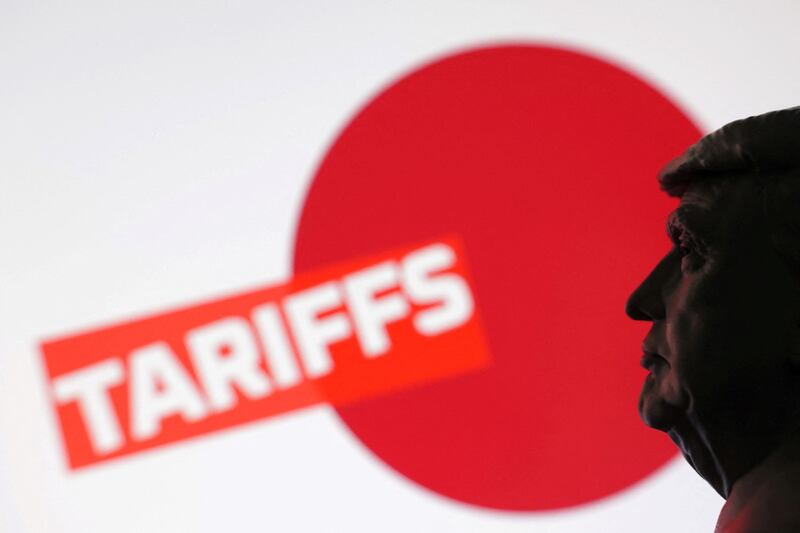
With the August 1 US tariff deadline fast approaching, South African businesses, civil society and professionals need to step in and lobby President Donald Trump and the Republican Party directly, as the government does not appear to be treating its conflict with the US with the urgency it demands, risking the imposition of harsh tariffs that could spell economic disaster for the country.
Max Meizlish, a senior research analyst at the influential US Foundation for Defense of Democracies, in a commentary in the Wall Street Journal this week, warned: “A reckoning is coming for South Africa. The Trump administration sees it. So does Congress ... Amid South Africa’s alignment with China, Russia and Iran, its anti-Israel lawfare and systemic corruption, the Trump administration has taken steps to isolate Pretoria.”
Meizlish further added that financial markets have not yet factored in South Africa's coming isolation.
US Treasury secretary Scott Bessent recently skipped a G20 finance ministers and central bank governors meeting in South Africa, though the country is the G20 president this year. The Washington Post recently reported that the White House National Security Council has banned “US agencies from all work on the G20 in South Africa”. It appears unlikely that Trump will attend the G20 leaders summit in Johannesburg later this year.
In addition to facing 30% tariffs, South Africa has also been subject to a 25% import tax on car parts since May, and a 25% import tax on vehicles since April — measures that have been applied to several other countries as well. Trump has warned that the US will impose an extra 10% tariff on any nation that aligns itself with what he calls the “anti-American policies” of Brics. South Africa is a member of the 10-nation Brics bloc.
To prevent an economic disaster, it is now essential for non-ANC and non-state actors — business leaders, civil society groups, think-tanks, and professionals with strong connections to Trump’s inner circle or the Republican establishment — to intervene. Their lobbying efforts should include urging the US administration to avoid punishing the South African public, but instead direct any response specifically at ANC officials.
The Trump administration, Republicans and allies have to be persuaded that the ANC is not the same as South Africa, and that the country as a whole should not be punished for the ANC’s long-standing anti-US policies, which were always in the narrow ideological interests of the party.
Before the GNU, the ANC largely governed South Africa as a party-state, with many policies based on the party’s ideological interests, which often undermined national and economic stability.
In spite of the ANC now being part of a multiparty GNU, ANC leaders have insisted that foreign policy is the sole prerogative of the ANC. However, ANC officials are not able to read the Trump administration, and have used inappropriate negotiation strategies that have inflamed Trump and Republican leaders.
It is critical, as part of its negotiations strategy with the US, that the ANC — which insists on being in full control of foreign policy, despite being in a multiparty GNU — stops blaming white, right-wing Afrikaner groups for influencing the Trump administration
Despite pleas — even from neutral observers — for the ANC to adopt a more pragmatic approach, its leadership continues to engage with the US using outdated paradigms. The ANC should have formed a negotiation team made up of business leaders, civil society figures and politicians with the capacity to establish meaningful connections with the Trump administration. Instead, it has insisted on maintaining control by keeping its own officials in charge of the process.
Former South African ambassador to Portugal Dr Kingsley Makhubela this week urged ANC leaders to engage with Republicans — who now govern the US — and not to prioritise lobbying Democrats, who are now in opposition. Worse, there are many Democratic leaders who are also not happy with the ANC’s anti-Americanism — and they are unlikely to support such lobbying.
ANC leaders last year appointed Ebrahim Rasool as the country’s ambassador to the US, knowing he was viewed with suspicion by the Trump administration. President Ramaphosa has now left the ambassador position vacant, knowing full well how critical negotiations with the US are for South Africa.
It is critical, as part of its negotiations strategy with the US, that the ANC — which insists on being in full control of foreign policy, despite being in a multiparty GNU — stops blaming white, right-wing Afrikaner groups for influencing the Trump administration. While these groups have no doubt exerted influence to some extent, the ANC needs to take responsibility for its overwhelming role in the destruction of South Africa’s relations with the US. This happened long before these right-wing groups talked to the Trump administration.
Non-ANC business, civil society and individuals now have to step in to help to prevent our beloved but unwisely-led country from being devastated by US sanctions, which stem mainly from years of ANC ideological and partisan anti-US policies. They also stem from the party’s continuing insistence on blame-shifting, rather than taking responsibility and becoming more pragmatic, inclusive and adopting an approach to negotiations involving non-ANC GNU members and South African business, civil society and professionals.
• Gumede is the former executive chair of the Democracy Works Foundation and author of South Africa in Brics.
For opinion and analysis consideration, e-mail Opinions@timeslive.co.za


Would you like to comment on this article?
Sign up (it's quick and free) or sign in now.
Please read our Comment Policy before commenting.